Article Content
Introduction
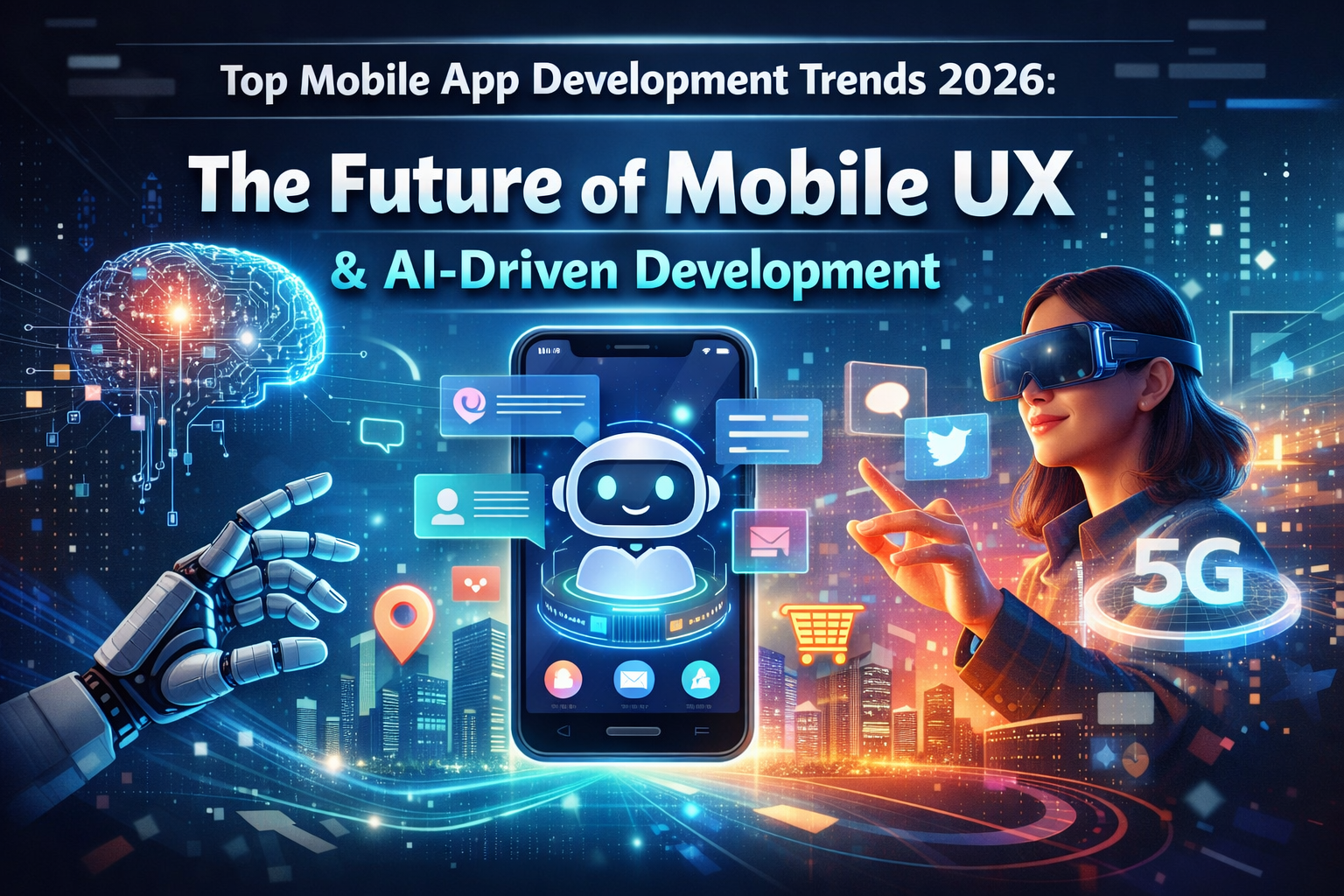
The mobile app industry in 2026 is evolving faster than ever. With the rapid advancement of artificial intelligence, changing user expectations, and new technologies like 5G and edge computing, mobile apps are no longer just tools—they are becoming intelligent digital companions.
Businesses and developers must adapt to this shift by focusing on AI-driven development and next-generation mobile UX (user experience). In this article, we explore the top trends shaping the future of mobile applications in 2026.
1. AI-Native Applications
Artificial intelligence is now the backbone of modern apps. Instead of adding AI as a feature, developers are building AI-first applications.
These apps can:
- Predict user behavior
- Automate repetitive tasks
- Provide smart recommendations
AI-native apps deliver a seamless and personalized experience, making them a key trend in 2026.
2. Rise of Autonomous AI Agents
Mobile apps are becoming smarter with AI agents that can act independently.
For example:
- Booking travel automatically
- Managing schedules
- Completing multi-step tasks
This reduces user effort and transforms apps into digital assistants rather than simple tools.
3. Hyper-Personalized User Experience
Personalization is now deeper and more dynamic.
Apps can:
- Adapt UI layouts in real time
- Recommend content based on behavior
- Customize onboarding experiences
This level of personalization improves engagement, retention, and overall user satisfaction.
4. On-Device AI & Privacy-First Apps
Privacy is a major concern in 2026, and apps are addressing it with on-device AI.
Benefits include:
- Faster performance
- Reduced reliance on cloud servers
- Better data security
Users now prefer apps that protect their data while still delivering smart features.
5. 5G and Edge Computing Integration
With widespread 5G adoption, apps are becoming faster and more responsive.
Key advantages:
- Real-time data processing
- Ultra-low latency
- Enhanced AR/VR experiences
Performance is now a critical part of mobile UX.
6. Cross-Platform Development Dominance
Frameworks like Flutter and React Native allow developers to build apps for multiple platforms with a single codebase.
Benefits:
- Faster development
- Lower costs
- Consistent user experience
Cross-platform development is now a standard practice in the industry.
7. AI-Assisted Development & No-Code Tools
AI is also transforming how apps are built.
Developers can:
- Generate code using AI tools
- Automate testing
- Design UI faster
No-code and low-code platforms are enabling non-developers to create apps, speeding up innovation.
8. Voice & Multimodal Interfaces
Touch is no longer the only way to interact with apps.
Modern apps support:
- Voice commands
- Gesture controls
- Visual inputs
This creates a more natural and accessible user experience.
9. Augmented Reality (AR) Experiences
AR is becoming a key part of mobile apps, especially in:
- E-commerce (virtual try-ons)
- Education
- Navigation
Immersive experiences are helping businesses engage users in new ways.
10. Super Apps & Ecosystem Integration
Super apps combine multiple services into one platform.
Examples of features:
- Messaging
- Payments
- Shopping
- Booking services
This reduces the need for multiple apps and creates a unified experience.
Future of Mobile UX
The future of mobile UX will be defined by:
- Predictive experiences (apps anticipate needs)
- Invisible interfaces (less manual interaction)
- Context-aware intelligence (apps understand user behavior and environment)
Conclusion
Mobile app development in 2026 is centered around intelligence, speed, and personalization.
To stay competitive, developers and businesses must:
- Embrace AI-first development
- Focus on user-centric design
- Prioritize privacy and performance
The future belongs to apps that are not just functional—but smart, adaptive, and human-focused.
Leave a Reply